
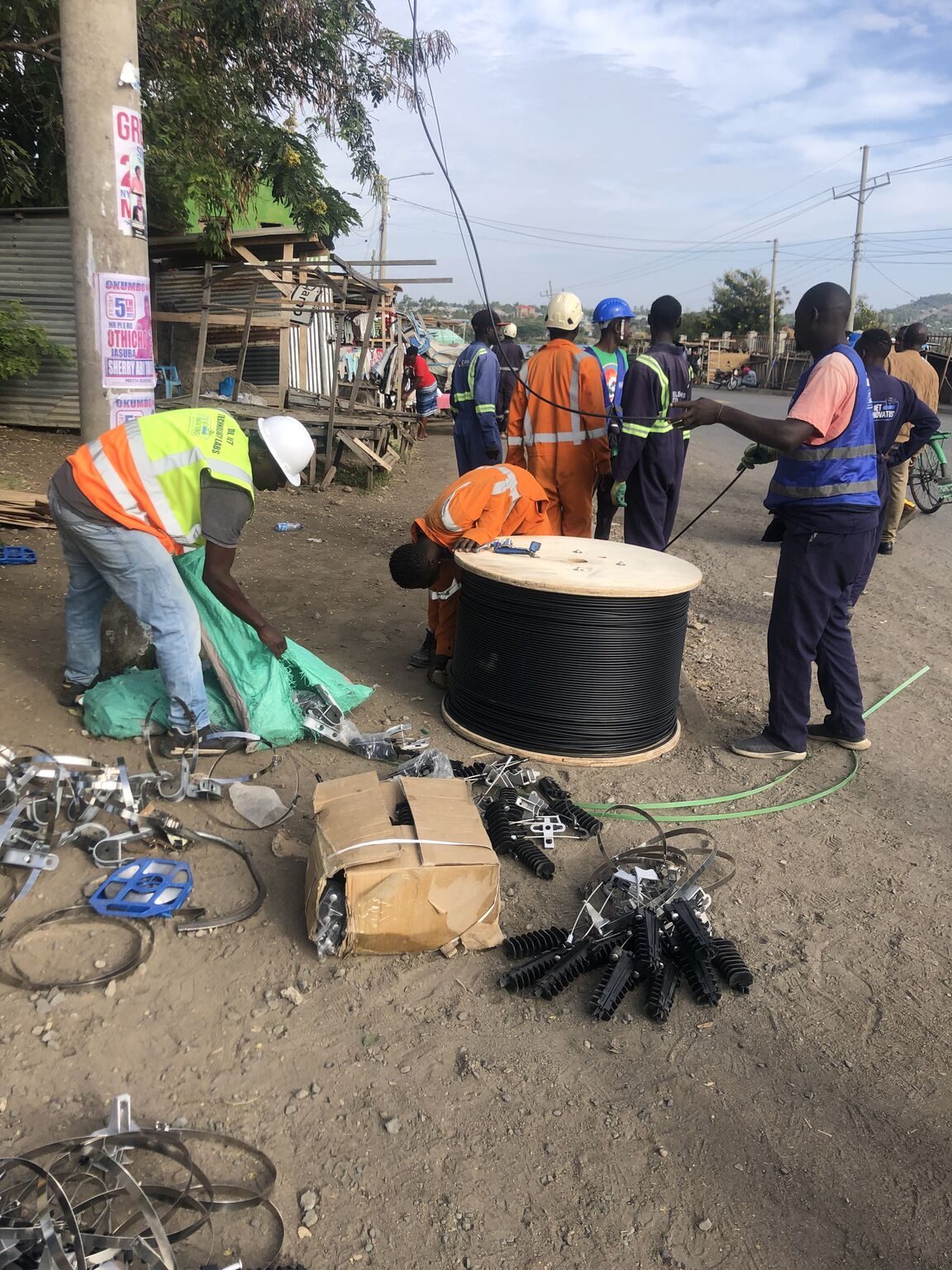
A complete package starts at the interfaces
For an aerial fibre order, approve the cable and every adjoining component as a matched assembly. A list containing cable, clamps and closures can still be incomplete if the clamp does not fit the cable or its bracket does not fit the pole. Review each interface before releasing quantities for shipment.
Separate the backbone from subscriber drops
Give ADSS distribution sections and customer drops separate order lines. Record cable outside dimensions and construction for each. A fitting intended for a flat drop cable is not interchangeable with one intended for round ADSS. Keep the location, drawing revision and intended duty beside each fitting rather than grouping all items under “clamps”.
Check cable to fitting
Ask for the exact hardware model, applicable cable dimensions, sheath compatibility and installation instructions. Identify terminations, intermediate supports and route changes using the approved pole schedule. Diameter compatibility alone does not establish the required mechanical duty. Have the route designer and suppliers resolve loads, angles and support arrangements before final selection.
Check fitting to pole
A quoted dead-end assembly may not include the hook, bracket, shackle, bolt or banding needed at the pole. List included and excluded parts explicitly. Pole material, dimensions and the approved attachment method matter. Use an assembly drawing or a labelled example photograph to show what is supplied; a loose product photograph is not a full installation detail.
Check closures, storage and entries
Confirm the cable-entry range, sealing arrangement, splice-tray capacity and mounting kit for each closure. If a cable includes metallic elements, refer bonding and grounding decisions to the network design and applicable requirements. Identify where service loops and downleads will be supported. Keep customer-side connectors and splitters on their own interface schedule if they are part of the same purchase.
Pack by work section and verify a sample set
Before the full shipment, review one proposed assembly from cable through pole attachment using the approved drawings and, where appropriate, a physical sample. A sample-fit check does not replace mechanical qualification. Mark boxes with component codes and work sections so the receiving team can reconcile them against the packing list. Set any spare quantities from the installation and maintenance plan, not an unexplained universal percentage.
Can one clamp model cover the whole project?
Only where its documented application range and duty match every relevant cable and location. Different cable sizes and support functions may require different models.
Are hooks and pole bands always included with a clamp?
No. Confirm the contents of each quoted set and list loose mounting items separately. A product name or photo may show parts that are not included in the price.
Must the buyer know every accessory name before enquiring?
No. Send a drawing, photographs and the intended function. Keep unresolved details visible and approve the final assembly and quantities before production or shipment.
Order review worksheet
| Item | Confirm before release |
|---|---|
| Cable → clamp | Construction, dimensions, sheath, hardware model and duty |
| Clamp → pole | Bracket/hook/bolt/banding scope and approved attachment |
| Cable → closure | Entry seal, capacity, cable preparation and mounting |
| Route → quantities | Terminations, supports, turns and service-loop locations |
| Packing → crew | Component codes, set contents, section allocation and spare list |
Before you approve the order
- Attach the approved cable and pole schedule to the package RFQ.
- Ask suppliers to mark every included and excluded mounting component.
- Review one complete assembly and record unresolved interfaces.
- Reconcile sets and loose parts against the packing list before dispatch.