
Agree the evidence before installation begins
For an African backbone or high-count access project, acceptance is easier to manage when the operator and contractor agree the required records before work starts. A folder containing many traces is not automatically a complete handover. Define which links and fibres are in scope, which methods apply, who reviews results and how exceptions are closed. This guide concerns the installed network acceptance package; it follows cable and closure selection rather than replacing those material decisions.
Separate factory records from installed-network acceptance
A factory report concerns its stated cable or production scope. It does not establish the condition of the completed route after transport, pulling, splicing and termination. Request the factory documents required by the purchase order, then define the separate field acceptance scope. The FOA's design guidance treats testing and documentation as planned project activities. Keep the connection between supplied cable references and installed links without describing a drum report as proof that the entire finished network has passed.
Give every fibre a traceable identity
Agree the link ID, endpoint names, cable reference and fibre numbering convention before files are created. For ribbon constructions, include the ribbon and fibre mapping needed to connect physical identification to the project schedule. Use the same IDs in the drawings, splice records and test filenames. If a numbering change occurs, document the mapping instead of leaving the reviewer to infer it. A complete file count is not enough if the records cannot be matched reliably to the installed fibres.
Distinguish insertion-loss measurements from OTDR records
The FOA explains that source-and-power-meter testing measures insertion loss, while an OTDR provides distance-based information about events along a fibre. These records answer related but different questions. Do not substitute one for the other merely because an instrument displays a loss value. Agree the required methods, wavelengths, reference procedure and limits with the project approver. This article supplies no universal pass threshold; the accepted specification must define the criteria for the actual link.
Specify the OTDR package, not only a screenshot
Where OTDR testing is required, define the direction or directions, setup documentation, launch and receive arrangements and file formats in the approved method. The FOA notes that backscatter differences can affect apparent event loss, making directional interpretation important. Have the responsible test engineer define the appropriate review, including bidirectional analysis where required. Retain native trace files and associated settings when the project calls for them; a screenshot alone may not allow a reviewer to inspect or reanalyse the result.
Reconcile the planned scope with delivered records
Build an acceptance matrix with one row per required fibre or other clearly defined test unit. Record the required tests, received files, review status and open issues. Include spare fibres according to the agreed contract scope rather than silently omitting them because they carry no service yet. Count missing, failed and unreviewed records separately. A reported percentage complete should have a clear denominator and should not combine records received with results formally accepted.
Close defects without erasing the history
For an exception, record its fibre ID, observed issue, responsible party, corrective action and retest evidence. Preserve the original result with its status and link the replacement record to it. The authorized reviewer should then accept or reject the revised result against the agreed criteria. If the operator permits a conditional handover, identify the exact outstanding scope and conditions. Avoid declaring the whole route accepted while unresolved items are hidden in an unrelated email thread.
Connect supply documents to the final handover
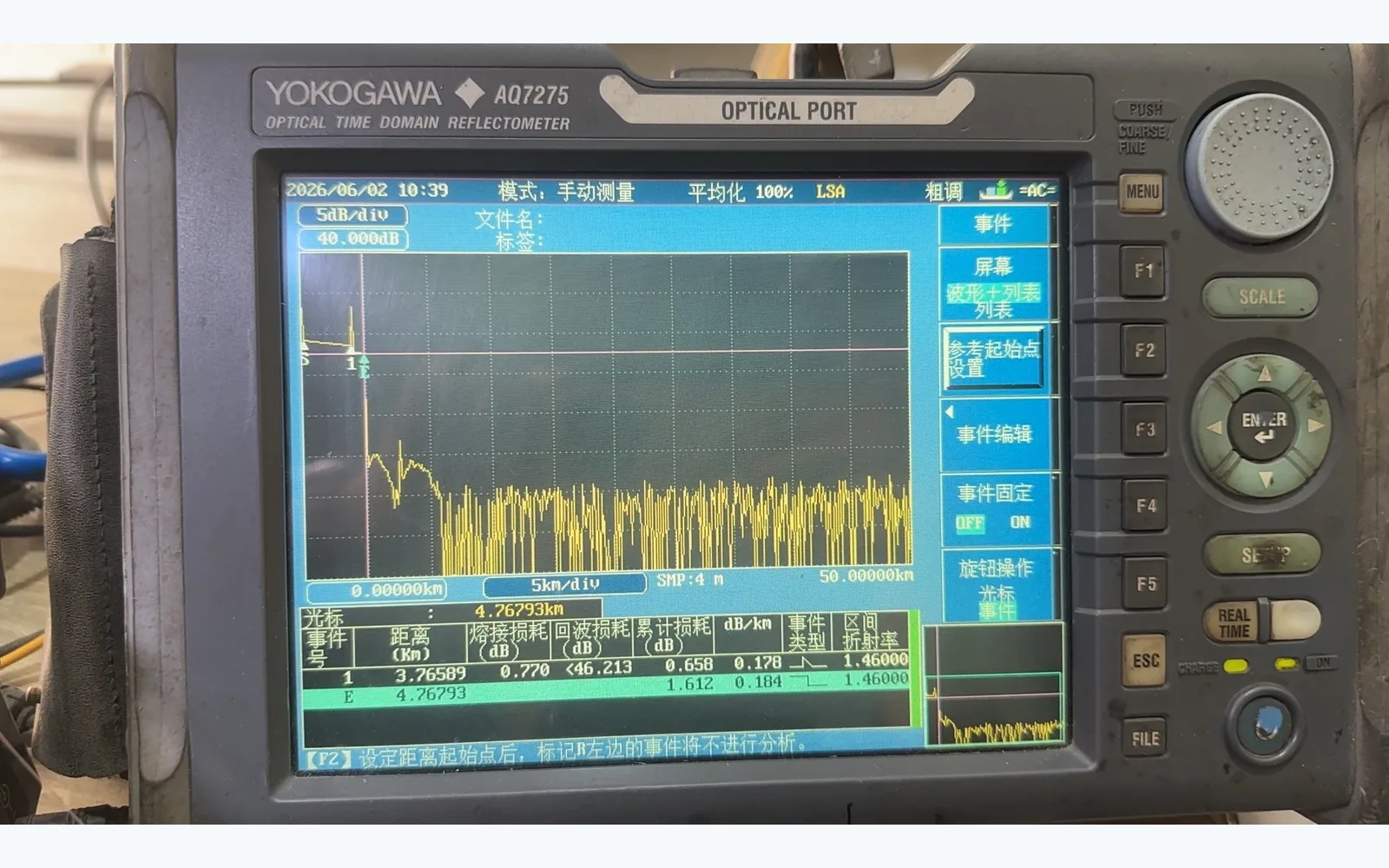
FTTH Africa can discuss the cable, accessory and factory-document package against the project requirements. Installed testing, interpretation and acceptance should follow the operator's approved procedure and assigned responsibilities. Send those documentation requirements with the material enquiry so expectations are visible early. The cover is a photograph of an OTDR screen used only to illustrate an instrument. Its displayed trace is not presented as a passing result, a customer project record or evidence of acceptance.
FAQ: Is a factory optical report enough for route handover?
It supports its own stated scope. The completed installed route needs the field evidence required by the project acceptance specification.
FAQ: Can OTDR results replace every insertion-loss test?
Do not assume that. Agree the required methods with the project approver; OTDR event analysis and insertion-loss measurement serve different purposes.
FAQ: Must unused fibres appear in the acceptance matrix?
List them and state the agreed testing disposition. Whether and how they are tested must follow the contract, not an undocumented omission.
FAQ: Does receiving all files mean the project has passed?
No. File completeness, technical review and formal acceptance are separate statuses. Close exceptions and record the authorized decision.
Installed-network acceptance matrix
| Record | Required content | Acceptance question |
|---|---|---|
| Fibre identity | Link, endpoints, fibre and ribbon mapping | Can the result be tied to the installed fibre? |
| Insertion loss | Agreed method, reference, wavelength and limit | Was the required test reviewed? |
| OTDR package | Trace files, setup and required direction analysis | Does the record satisfy the agreed scope? |
| Exceptions | Original issue, action and linked retest | Has the authorized reviewer closed it? |
| Handover | Scope reconciliation and decision record | What is accepted and what remains open? |
Before agreeing the handover package
- Define the links, fibres and spare-fibre testing scope.
- Align IDs across drawings, splice schedules and filenames.
- Agree methods, wavelengths, reference procedures and acceptance limits.
- Specify required native files, settings and review responsibilities.
- Track missing records, failures and unreviewed results separately.
- Close exceptions and obtain an explicit acceptance decision.