
Select a complete configuration for each joint
For an African backbone or high-count access project, choose the closure from the cables entering the joint, the splices actually required and the fibres that must pass through or remain stored. A headline maximum fibre count is not enough. Confirm the exact enclosure, tray, splice-holder and sealing-kit combination before ordering. This guide follows cable-structure selection and addresses the joint materials needed to make that choice usable.
Count splices, through fibres and future work separately
Create a joint schedule with an ID for each location. List incoming and outgoing cables, fibres to be spliced now, uncut fibres passing through, stored reserve and planned later branches. Do not assume that all fibres in a cable are spliced at every joint. Conversely, do not count an unused entry port as proof that the closure can accommodate another cable and its internal routing. Keep physical entry capacity and internal fibre-management capacity in separate columns.
Ask what the advertised capacity actually includes
CommScope's closure and tray listings show that capacity is tied to particular tray and splice arrangements. For the offered product, obtain the number and type of trays included, the supported splice protectors and the maximum approved configuration. Distinguish a fully equipped capacity from the hardware delivered in the base kit. An order for an enclosure plus one tray should not be recorded as a complete maximum-capacity joint unless the supplier documents that configuration.
Check ribbon compatibility at the tray and holder
Give the closure supplier the actual ribbon construction and intended splicing method. Confirm ribbon routing, storage, splice-protector dimensions and holder compatibility for that arrangement. A tray described as suitable for individual-fibre splices does not establish compatibility with a mass-fusion protector. Likewise, a rollable-ribbon tray reference does not approve every ribbon product. Obtain a configuration drawing or controlled assembly evidence for the offered combination instead of inferring compatibility from the enclosure size.
Build an entry-port schedule using actual cable dimensions
For every cable, list its outside dimensions and assign the proposed entry, seal and retention parts. Record whether access is end-entry or a mid-span application with uncut fibres. Ask the supplier to confirm the relevant kit and internal routing arrangement. Manufacturer examples show that seal options can cover different cable ranges; use the range for the exact offered kit, not the largest diameter mentioned anywhere in the product family. Include blanks for entries not used initially.
Specify the local installation conditions
A pole-mounted joint, a wall location and a chamber installation need different project information. State the location, mounting method, access constraints and environmental requirements from the operator's specification. Request evidence applicable to that use, and identify any re-entry consumables needed for later work. Do not treat all African projects as one climate or assume that a protection label alone approves every chamber or burial condition. Site access and safe work remain the contractor's responsibility.
Use a representative assembly to close an uncertain interface
When the combination is new to the project, agree an assembly review using the proposed cable, trays, protectors, seals and retention parts. Record the exact references and the checks required by the operator: cable preparation, fibre organization, storage, closure operation and applicable optical or sealing acceptance. Photograph the agreed arrangement and record unresolved issues. A successful review of one configuration does not approve substitutions with different cable diameters or tray systems.
Order by joint type and installation phase
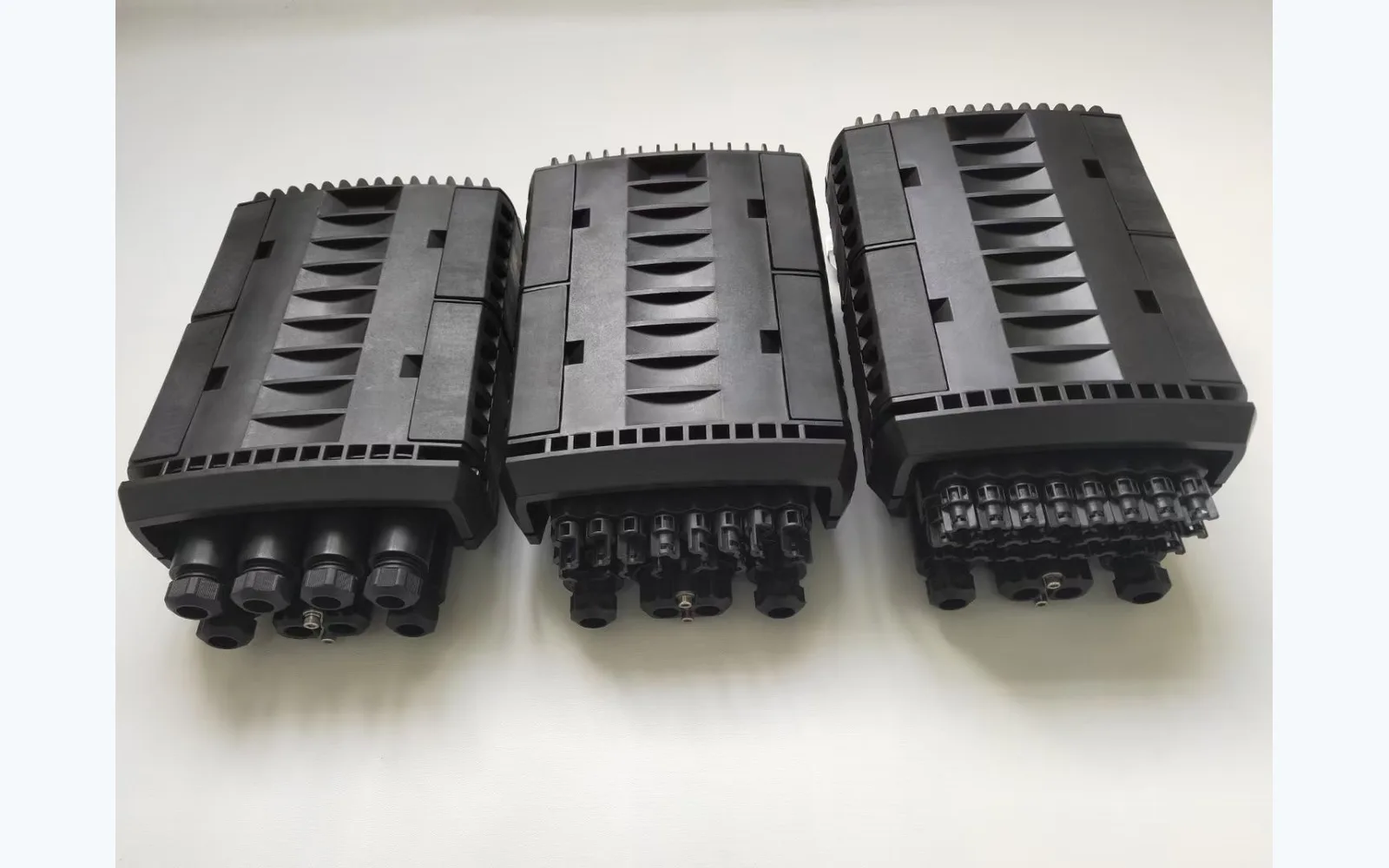
Group only genuinely identical approved joints into one kit reference. Itemize enclosure, trays, splice holders, protectors where included, entry seals, retention components, mounting parts and re-entry spares. State what the installer supplies separately. FTTH Africa can review the cable and joint-material enquiry as a coordinated supply package; model availability and compatibility must be confirmed in the offer. The cover contains local closure product photographs, not an African installation record or proof that those samples accept ribbon splices.
FAQ: Can a 288-fibre cable use any closure advertised for 288 fibres?
No. Compare the actual joint schedule, splice method, trays, entries and storage requirements with the documented configuration. The cable count alone cannot establish compatibility.
FAQ: Should every reserve fibre be spliced immediately?
Follow the operator-approved joint plan. Separate fibres to be spliced now from those passing through or stored for later access; each still needs an appropriate management arrangement.
FAQ: Can we replace a tray with another brand of similar size?
Do not assume interchangeability. The supplier and project approver need to confirm mounting, routing, protector retention and the resulting configuration before substitution.
FAQ: What is the quickest way to obtain a useful quotation?
Send a joint-by-joint cable and splice schedule, exact cable dimensions, ribbon information, operator requirements and quantities. Mark unresolved configurations instead of quoting only a total number of boxes.
Joint configuration matrix for the procurement package
| Interface | Record for each joint type | Do not infer from |
|---|---|---|
| Fibre duty | Spliced, express, stored and future fibres | Total cable fibre count alone |
| Tray assembly | Included trays, splice method, holders and protectors | Maximum capacity in a headline |
| Cable entries | Cable dimensions, port assignment, seals and retention | The number of visible ports |
| Site and access | Mounting, environment, re-entry and required evidence | A generic outdoor description |
| Supply kit | Approved references, quantities, exclusions and spares | A photograph of a complete sample |
Six checks before releasing the closure order
- Create joint IDs and a cable-to-cable splice schedule.
- Separate splice capacity from express-fibre and reserve storage.
- Confirm the exact ribbon, tray and protector arrangement.
- Assign each cable to a documented entry and sealing kit.
- Close assembly, environmental and operator-approval questions.
- Issue itemized kits by joint type, quantity and delivery phase.