
Choose from the project conditions, then compare the cable designs
For an African backbone project, ribbon-organized cable is worth evaluating when fibre density and repeated high-count splicing matter. Conventional loose individual fibres can remain useful where the project emphasizes selective access, familiar equipment and an established maintenance stock. Compare complete offered constructions for the same route and capacity before deciding. Country, operator requirements, installation method and crew resources are more useful inputs than an assumption that one structure suits the whole continent.
Clarify what ribbon and loose tube mean in the quotation
Ribbon describes how fibres are organized together. Loose tube describes an element of the cable construction, and a ribbon cable may itself contain tubes. In this comparison, conventional loose-fibre cable means a design in which the crew normally prepares and splices individual fibres, while ribbon-organized cable is reviewed for its specified ribbon and splicing arrangement. Ask for drawings of both complete designs. Keep fibre organization separate from armour, sheath, water protection and the requirements of the installation method.
Start with active capacity and the expansion plan
List the fibres allocated to initial services, protected or alternative routes where designed, future services and maintenance reserve. Identify the handover points and which fibres need access at each location. Do not choose a high count merely to match a familiar product name, or assume every reserved fibre needs an immediate splice. Compare the proposed capacity with the project's staged activation and documentation plan. There is no universal fibre-count threshold at which ribbon automatically becomes the right answer.
Compare actual cable dimensions against the available route
For duct sections, provide the usable duct or subduct dimensions, existing occupancy, bends, installation lengths and permitted method. Compare the actual offered outside diameter, mass and installation requirements. Fibre density is a reason to investigate a design, not proof that its finished cable will fit the route. If the route includes aerial or direct-buried sections, obtain constructions specifically assessed for those duties. Changing the fibre arrangement does not remove the need for route-specific mechanical and environmental protection.
Assess splicing as a complete work package
FOA describes mass fusion as joining a ribbon together, which can be useful when many fibres must be connected at repeated splice points. Real project productivity also depends on preparation, tools, operator experience, tray routing, testing and access. Record the splicer, holders, stripper, cleaver and consumables available to the team, including access to service or replacements. Compare the planned tasks with the actual ribbon format and dimensions. A generic claim about faster splicing is not an estimate of this project's completed and accepted joints.
Check closures, branching and repair access
Obtain the proposed closure and tray references with the intended splice arrangement and cable entries. Review usable capacity, ribbon storage and the work needed to access individual fibres at branches. A printed maximum fibre count may depend on a different tray or splice configuration from the one being purchased. For an existing network, identify where the new construction meets legacy cable and how that transition will be prepared and recorded. Include the materials and equipment needed for a future repair, not only the initial main-route splice.
Use a representative joint to resolve interface uncertainty
Where the team is introducing an unfamiliar ribbon arrangement or closure configuration, agree a sample or pilot-joint review before bulk release. Have the responsible team verify preparation, splicing, routing, identification and the required optical acceptance using the proposed materials. Record the exact references, tools and results. If a pilot reveals an interface problem, resolve the cable, tool or closure choice before scaling the order. A small review supports the specified configuration; it does not establish every installation condition along a long route.
Compare the installed scope and maintenance burden
Evaluate cable, closures, trays, tools and consumables together with preparation, testing, local logistics and replacement stock. Ask which costs are included and what depends on crew assumptions. Consider whether repair teams can obtain compatible materials and keep records current after the original contractor leaves. For phased projects, align drum lengths and deliveries with the approved section and splice schedule. FTTH Africa can organize a cable and accessory proposal around these inputs without assuming a universal cost or time saving.
Keep the final decision traceable
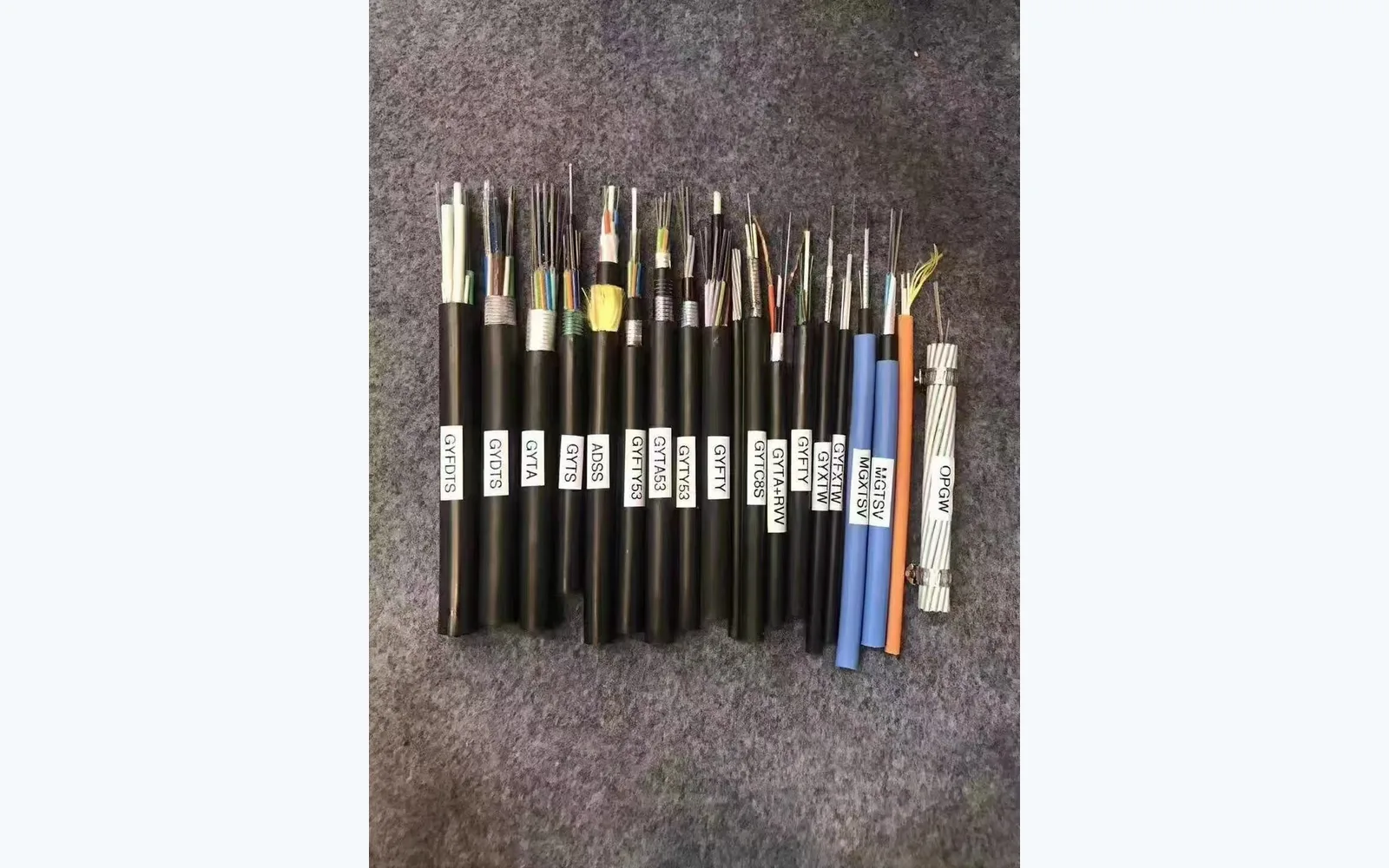
Record the chosen construction, unresolved assumptions, approved interfaces, test requirements and the person authorizing the selection. Give design changes a controlled review, particularly when they alter fibre access, cable dimensions or the available splicing resources. The cover shows factory cable samples, including loose-tube designs. It is a reference to cable families and does not identify a ribbon product, a completed African project or a particular customer's network.
FAQ: Is ribbon cable only for very large fibre counts?
High count and density are common reasons to consider it, but the decision also depends on the splice plan, offered dimensions, tools and lifecycle work. Avoid selecting by a universal count threshold.
FAQ: Is ribbon automatically smaller than loose-tube cable?
Compare complete offered designs at the same fibre count and required protection. The word ribbon does not establish the finished outside diameter or route suitability.
FAQ: Can a ribbon design connect to an existing loose-fibre network?
A transition may be feasible, but the project needs an approved preparation, splice and tray arrangement for the actual fibres and cable designs. Include testing and identification of the transition in the plan.
FAQ: What should an initial project inquiry include?
Provide country, operator requirements, route method, active and reserve fibres, available ducts, splice and branch locations, crew tools, closure references, phased lengths and acceptance requirements. Mark unknowns so the proposal can address them explicitly.
Backbone construction comparison for the project team
| Project condition | Ribbon-organized design: review | Conventional loose-fibre design: review |
|---|---|---|
| Capacity and density | Actual fibre count, ribbon format and finished cable dimensions | Actual fibre count, unit layout and finished cable dimensions |
| Repeated main-route joints | Mass-fusion workflow, preparation tools and crew readiness | Individual-fibre workflow, labour plan and available tools |
| Branching and legacy interfaces | Access to required individual fibres and transition method | Unit and fibre access, splice mapping and transition method |
| Closures and trays | Approved ribbon routing, protection and usable configuration | Approved fibre routing, protection and usable configuration |
| Maintenance and cost | Compatible repair stock, equipment support and total work scope | Compatible repair stock, established crew methods and total work scope |
Six decisions before the backbone cable purchase
- Define initial services, reserve fibres, branches and expansion phases.
- Record the route and the installation requirements for every section.
- Compare complete cable drawings and dimensions against the same project brief.
- Confirm the crew's splicing tools, consumables and support arrangements.
- Approve closure interfaces and resolve unfamiliar combinations through a representative review.
- Reconcile installed cost, repair stock, drum allocation and acceptance evidence before ordering.